- 3
- 8
- 3
- 4

- No.62, Melagama, Wadduwa, Sri Lanka 12560
- 24 x 7
Dambulla, located in Sri Lanka’s Central Province, is one of the country’s most revered cultural and spiritual landmarks. Best known for its stunning Rock Cave Temple Complex, often referred to as the Golden Temple of Dambulla, this ancient site is a UNESCO World Heritage Site and a cornerstone of Sri Lankan Buddhist heritage. The site’s dramatic history, religious significance, and remarkable artistic achievements make it a must-visit destination for pilgrims, tourists, historians, and art lovers alike.
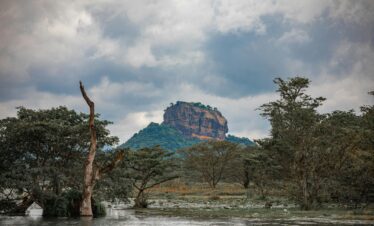
Dambulla sits at a strategic crossroads in Sri Lanka’s Cultural Triangle, positioned near other ancient cities like Anuradhapura, Polonnaruwa, and Sigiriya. The town itself lies atop a large granite outcrop that rises over 160 meters above the surrounding plains, offering panoramic views of the lush countryside.
Its central location made Dambulla an important hub for trade, defense, and religion throughout Sri Lankan history. Most notably, its natural caves offered refuge and sanctuary to monks, kings, and travelers over the centuries.
The history of the Dambulla Cave Temple dates back over 2,000 years. According to Sri Lankan chronicles such as the Mahavamsa, the caves became a sacred site during the 1st century BCE when King Valagamba (also known as Vattagamani Abhaya) took refuge there after being driven from the throne by South Indian invaders.
While in hiding, the king was protected by Buddhist monks living in the caves. Once he regained the throne, King Valagamba returned to Dambulla and transformed the caves into a religious site in gratitude. He ordered the construction of shrines and the carving of statues, laying the foundation for what would become the largest and best-preserved cave temple complex in Sri Lanka.
Successive kings and devotees continued to expand and embellish the temple over the centuries, turning it into a center of Buddhist worship and artistic excellence.
The Dambulla Cave Temple comprises five major caves, each containing shrines, murals, and statues of the Buddha, bodhisattvas, and Sri Lankan kings and deities. These caves span from the 1st century BCE to the 18th century, with some additions made during the Kandyan period.
Here’s a closer look at each of the five main caves:
This cave features a 14-meter-long reclining Buddha carved directly into the rock. Next to the statue is an image of Vishnu, the Hindu deity believed in Sri Lankan tradition to have protected the site.
The largest and most spectacular cave, Cave 2 houses over 50 statues, including life-sized images of Buddha and statues of King Valagamba and King Nissanka Malla, who contributed to the temple’s expansion. The cave’s ceiling and walls are adorned with intricate Kandyan-era frescoes depicting scenes from the life of the Buddha and Jataka tales (stories of his previous lives).
This cave alone captures the religious fervor and artistic brilliance of ancient Sri Lanka.
Renovated in the 18th century under King Kirti Sri Rajasinha, Cave 3 features a large seated Buddha and stunning murals typical of the Kandyan period. These paintings exhibit floral motifs, narrative scenes, and striking symmetry in red, gold, and black tones.
A smaller cave containing a central seated Buddha and several other statues. The walls and ceilings are painted with religious imagery, continuing the aesthetic tradition of the larger caves.
This relatively modern cave contains several seated and reclining Buddhas, including wooden statues painted in traditional style. While not as ancient, it complements the overall harmony of the complex.
What makes the Dambulla cave complex truly extraordinary is the fusion of architecture and natural environment. Instead of constructing temples from the ground up, ancient craftsmen utilized the natural rock formations, carving directly into the stone to create spaces of worship. The interiors of the caves are rich with:
Mural paintings covering over 2,000 square meters, among the largest collections of ancient Buddhist art in South Asia.
Over 150 Buddha statues, ranging from serene seated figures to monumental reclining Buddhas.
Statues of Hindu gods (like Vishnu and Ganesha), showcasing religious harmony and syncretism.
These artistic elements reflect a variety of stylistic influences—Anuradhapura, Polonnaruwa, and Kandyan—demonstrating the site’s continuous development over centuries.
Dambulla is more than just an archaeological wonder; it is an active pilgrimage site and monastery. Buddhist monks still live and meditate in the area, and visitors often find devotees offering flowers, lighting oil lamps, and engaging in prayer rituals.
The temple is particularly significant during Poya (full moon) days, when thousands of pilgrims gather to participate in ceremonies and make offerings.
Its enduring religious relevance reflects the deep-rooted devotion to Buddhism in Sri Lankan society.
At the foot of the rock stands the modern Golden Temple, featuring a giant golden Buddha statue seated atop a multi-tiered museum. Though more recent, it symbolizes the continuity of Buddhism from ancient to modern times and serves as the entrance to the cave complex. The museum below offers exhibits on Buddhist history and temple restoration efforts.
Dambulla is easily accessible from major cities like Kandy, Sigiriya, and Colombo, making it a popular stop on Sri Lanka’s Cultural Triangle circuit. Visitors must climb a stone stairway to reach the cave complex, which offers stunning views of the surrounding plains and forests.
Tips for visiting:
Dress modestly (as it’s a sacred site)
Footwear must be removed before entering the temple
Early morning or late afternoon visits are ideal to avoid crowds and heat
In 1991, the Dambulla Cave Temple was designated a UNESCO World Heritage Site, recognized for its cultural, artistic, and spiritual importance. It is considered the best-preserved cave temple complex in Sri Lanka, representing more than 2,000 years of continuous religious practice.
Dambulla stands as a living testament to Sri Lanka’s deep spiritual roots, artistic mastery, and cultural resilience. Carved into a massive rock face and adorned with centuries of sacred art, the Dambulla Cave Temple is not only a place of worship but a sanctuary of history and peace. For those seeking a deeper understanding of Sri Lankan Buddhism, heritage, or ancient art, Dambulla offers a profound and unforgettable experience.